
The Flesh of Things
Title:
Paper Thin Skin Deep
Location:
Mundaring Art Centre, WA
2026
Curated by Annette Peterson
Paper Thin, Skin Deep brings together nine West Australian artists whose practices interrogate the material and metaphorical layers of skin through the lens of paper and sculpture. A study of surface, body and environment, the exhibition reflects on how the most delicate of materials can hold, record, and reveal human experience.
Drawing on diverse cultural perspectives, including those of First Nations artists, the exhibition presents newly created works from emerging, mid-career, and established practitioners. Through the process of folding, casting, stitching, and layering, paper becomes a substance that records pressure, time and gesture, while sculptural forms evoke the visceral qualities of skin as both a barrier and register of experience.
Addressing trauma, tenderness, memory, transformation and identity, the artworks challenge the notion that surface is merely skin-deep, instead highlighting material as a vessel with the ability to express vulnerability and psychic states. Cuts, creases, layers, and impressions echo the ways bodies hold histories, and how experience settles into form.
This exhibition invites reflection on how we inhabit bodies, materials, and memories, with paper and sculpture the messenger to convey unique approaches to embodiment.
Statement:
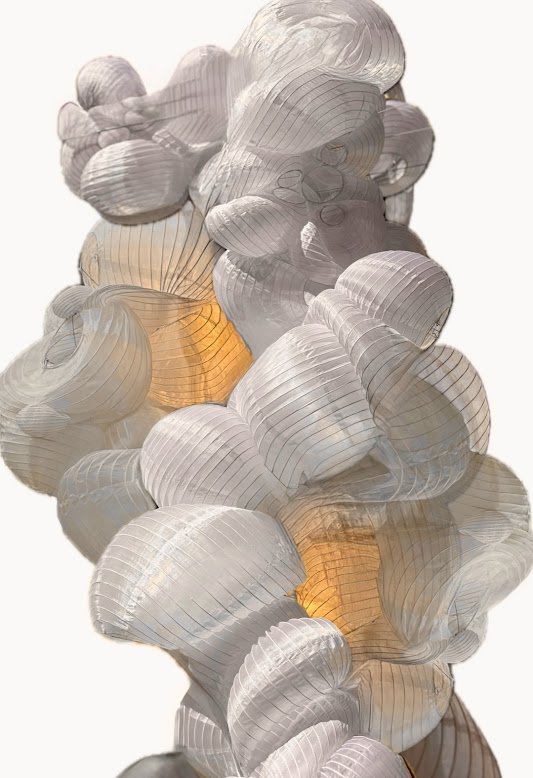
The Flesh Of Things reflects on the tension between giving and depletion, especially in womanhood and the maternal body. I reused materials from past projects, combining them with new elements to symbolise strength, vulnerability, and transformation.Glowing lanterns and elastic fabric illustrate resilience and the strain of caretaking, while reworked pieces highlight ongoing cycles of change in ourselves and our surroundings.This work continues my practice of turning discarded or everyday materials into objects with new meaning. By reusing elements from past projects,I explore transformation, sustainability, and renewal - a process echoing how we rebuild ourselves and our lives.This sculpture is shaped like a living, breathing body - stretching, curving, and swelling under the weight of its own making. Crafted from repurposed lanterns and elastic fabric, it softly glows from within, using discarded materials to capture the cycles of creation, exhaustion, and renewal found in both body and planet. Rooted in reflections on womanhood and the maternal body, the work explores themes of expansion, adaptation, and transformation.I acknowledge both the privilege and pressure of my experience, remaining mindful of the broader stories of women in different cultures. The glowing core represents a restless desire for recognition and purpose, while the delicate, stretched fabric reveals the tension between abundance and strain - giving that is both beautiful and exhausting.Ultimately, the sculpture invites viewers to pause and reflect on the meaning of nurturing in a world that constantly demands more, asking how we might grow, give, and support each other without losing ourselves.